

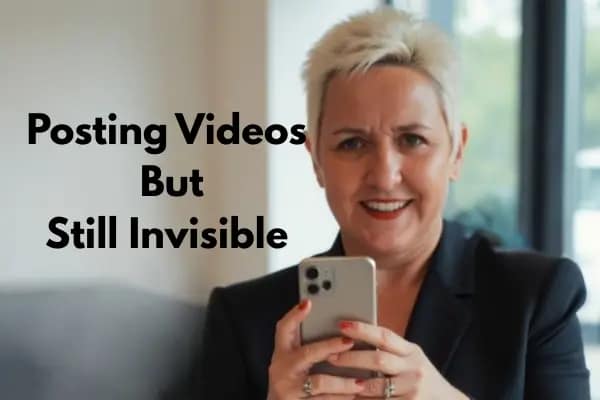
Every real estate marketing guide eventually gets to the part where it tells agents to use video. The statistics appear. Listings with video receive 403 percent more inquiries than those without, and 73 percent of homeowners say they are more likely to list with a real estate agent who uses video marketing (REsimpli). The argument is made in data and the agent nods along, understands it intellectually, and still does not fully grasp why video specifically produces results that other content formats do not. The statistics describe the outcome. They do not explain the mechanism.
The mechanism matters because understanding it changes how an agent uses video, what they put in it, and why consistency over time produces compounding results rather than linear ones. An agent who is using video because the statistics say to is making a different set of decisions than an agent who understands specifically what video does that a well-written blog post, a detailed market report, a polished headshot, or a consistent posting schedule of static graphics cannot do.
The case for why video is essential for real estate is not primarily a statistical one. The statistics are a symptom of the mechanism. The mechanism is that video is the only format that allows a prospect to evaluate an agent as a person before the first direct interaction, and that evaluation produces a qualitatively different kind of readiness to engage than any other content format produces.
Key Takeaway
Video is essential for real estate specifically because it transmits the signals that human beings use to evaluate whether another person is trustworthy, competent, and worth engaging with. Those signals (face, voice, manner of speaking, quality of reasoning, consistency of presence) cannot be transmitted by static content. They can only be transmitted by video. Every other argument for why video works in real estate is downstream of this one.
Table of Contents
What Static Content Cannot Transmit
A real estate agent’s written content can demonstrate market knowledge. A blog post can show that the agent understands local market dynamics, can analyze data, and can communicate clearly. Those are valuable signals. They are not sufficient for the kind of trust that produces a client relationship.
The prospect who reads a well-written market analysis learns that the agent is knowledgeable. They do not learn whether they would feel comfortable calling that agent, whether the agent’s communication style would be a good fit for how they process information, whether the agent seems like someone who would be direct with them when the market is doing something they do not want to hear. Those evaluations require experiencing the person, not reading their work.
Studies using brain imaging show that when people see faces, their brains make split-second judgments about trustworthiness. Clients are scanning for signs that you are reliable before they even process your credentials. Smiling in videos, maintaining eye contact, and showing empathy activate trust signals in the brain. Neuroscience tells us that trust is not just logical, it is biological.
That biological response is what static content cannot trigger. The prospect who reads an agent’s market report is processing information. The prospect who watches an agent deliver market perspective on camera is experiencing a person. Those are different cognitive processes and they produce different outcomes in the prospect’s internal evaluation. Information processing can produce intellectual respect. Experiencing a person produces the gut-level assessment of whether this is someone to trust with a significant financial decision.
This is why two agents with equivalent market knowledge and equivalent writing ability can produce dramatically different results from video. The one whose video presence produces that gut-level trust signal is not necessarily more knowledgeable. They are more visible in the format that allows the prospect to make the evaluation that matters.
What Video Transmits That Nothing Else Can
Video transmits five specific signals simultaneously that no other content format can deliver at the same time in the same interaction.
The first is face. The human brain processes faces differently from any other visual input. Repeated exposure to the same face increases comfort and trust. When agents appear consistently, they become recognizable. Recognition reduces resistance. Reduced resistance increases inquiry rates (CloudPano).A prospect who has seen an agent’s face a dozen times across six weeks of video content has a relationship with that face that does not exist with an agent they have only read about. The face becomes familiar. Familiar reduces the perceived risk of reaching out.
The second is voice. Voice carries information that text cannot. The pace at which someone speaks when discussing a difficult market condition tells the prospect something about how the agent will handle the conversation when the appraisal comes in low. The steadiness of tone when delivering news the client might not want to hear tells the prospect something about how the agent will manage the transaction when it gets complicated. These are not consciously processed evaluations. They are the kind of background calibration that humans perform automatically when assessing whether another person is reliable.
The third is reasoning quality. A written market analysis can be edited until the logic is tight. A video market analysis is delivered in real time and the prospect can observe the quality of the agent’s thinking as it unfolds. An agent who can clearly articulate why a specific neighborhood’s inventory trend is meaningful, what the causal factors are, and what it implies for a buyer or seller in that area right now is demonstrating a quality of reasoning that a polished written piece cannot fully convey. The unedited quality of the live reasoning is the evidence the prospect is actually evaluating.
The fourth is consistency. A prospect who watches the same agent deliver market perspective across ten videos over three months has observed something that a single polished interaction cannot demonstrate: whether this agent shows up the same way when the market is slow, when conditions are uncertain, when the news is not what buyers and sellers want to hear. Consistency across time and conditions is the signal that a referral network transmits about an agent to their contacts. Video transmits that same signal at scale to prospects who have no referral relationship with the agent.
The fifth is specificity. An agent who delivers generic real estate content on video is demonstrating that they know real estate. An agent who delivers specific observations about a defined local market is demonstrating that they know that market. The prospect who is considering buying or selling in that specific area cannot get that specific perspective from a national platform, a market report, or any other agent who serves a broader geography. The specificity of the content is what converts general recognition into the specific association, this agent knows my market, that makes the eventual call feel like a confirmation rather than a cold inquiry.
Why the Combination Is More Than the Sum of Its Parts
These five signals (face, voice, reasoning quality, consistency, and specificity) are more powerful in combination than any of them would be individually. A static headshot transmits face without voice, reasoning, consistency, or specificity. A podcast transmits voice and reasoning quality without face or visual consistency. A written market report transmits reasoning quality and specificity without face, voice, or the behavioral consistency that video delivers across multiple installments.
Video is the only format that transmits all five simultaneously and repeatedly, producing the compounding effect that makes recognition deep enough to change behavior. The prospect who has been watching an agent’s specific, locally grounded video content for three months has evaluated that agent across all five dimensions more times than they could have through any other medium. By the time they are ready to act, the evaluation is essentially complete. The call they make is not to gather information for an evaluation. It is to confirm the decision they have largely already made.
A faceless video sells a house once. A video with the agent in it sells the agent’s expertise forever (Getkoro). That distinction is not about production quality or content strategy. It is about what the presence of the agent’s face, voice, and reasoning in the video adds to every subsequent impression the prospect has of that content. The video without the agent delivers information. The video with the agent delivers an experience of the person behind the information.
That experience is what the Video for Real Estate system is built to deliver consistently and repeatedly to a defined local audience. The distribution infrastructure ensures the right people see the content. The retargeting layer deepens the relationship with prospects who have engaged with it. But the foundation of what makes the system work is the specific quality of trust signal that video transmits and that no other format in the agent’s marketing mix can replicate.
Why Real Estate Specifically Requires This Signal
Not every industry requires the same depth of personal trust before a transaction occurs. A consumer buying a commodity product online does not need to evaluate the trustworthiness of the person who made it. They need to evaluate the product.
Real estate is different in a specific way that makes the personal trust signal unusually important. The transaction is not just large. It is emotionally significant, logistically complex, and dependent on the agent’s judgment and behavior across dozens of interactions that the client cannot fully anticipate in advance. The client is hiring a person, not purchasing a product. The evaluation they are making before hiring an agent is a person evaluation, not a product evaluation.
Only 38 percent of real estate agents currently use video for their marketing despite listings with video receiving 403 percent more inquiries than those without (REsimpl). The gap between effectiveness and adoption reflects the difficulty of the personal evaluation signal, not ignorance of the data. Agents who do not use video are not unaware that video works. They are avoiding the format that requires them to be evaluated as a person rather than as a provider of market information. The avoidance is understandable. It is also the reason that the 62 percent of agents who are not using video are invisible in the portion of the market that is forming preferences through digital content before making the call.
The buyers and sellers who are watching an agent’s video content are doing the kind of evaluation that traditionally only happened through referrals. The referral relationship works because the referring person has already done the personal evaluation and is transmitting their conclusion. Video allows the prospect to do that evaluation directly, without a referral intermediary, across a sustained period of exposure. The outcome is the same relationship depth that a referral produces, at a scale that a referral network alone cannot reach.
What This Means for How an Agent Uses Video
Understanding the mechanism changes what goes into the video. If the objective is to transmit the five signals that produce the trust evaluation, face, voice, reasoning quality, consistency, specificity, then several common approaches to real estate video are less effective than they appear.
Listing walkthroughs where the agent is not on camera transmit specificity about a property but not the agent evaluation signals. They are useful for marketing individual listings and less useful for building the personal recognition that produces pipeline results. The agent who only produces listing videos has a presence on the platform but not the kind of presence that produces the behavioral change in prospects that the recognition system is designed to create.
Generic market updates that could apply to any market in any city transmit the agent’s willingness to produce content without demonstrating the specific local knowledge that makes the association durable. A prospect who watches a video about national housing market trends knows the agent is tracking the national market. They do not know whether the agent knows what is happening at the specific neighborhood level that is relevant to their decision.
Trend-following content, videos produced around viral formats or popular audio tracks, generates reach without generating the specific associations the system requires. Viral reach produces impressions. Specific, locally grounded content on camera produces the recognition that eventually converts.
The video content that builds the most durable pipeline recognition is an agent on camera delivering specific, currently relevant observations about a defined local market. Not national statistics repurposed for a local audience. Not listing promotions. The agent’s own reading of what is happening in the specific geography they serve, delivered in the agent’s own voice, reasoning through the implications for a buyer or seller who is considering a decision in that area right now.
That content transmits all five signals. It is specific enough to be useful to the right audience. It is personal enough to allow the trust evaluation to begin. It is consistent enough, when produced regularly over time, to allow the evaluation to deepen. And it is the only thing in the agent’s marketing mix that can produce the inbound conversation that starts with a prospect saying they have been watching the videos and wanted to ask a question.
The Compounding Effect Over Time
The mechanism that makes video essential for real estate is also what makes it more effective over time rather than less. Most marketing produces linear results. The money spent on portal leads this month produces contacts this month. Stop spending, contacts stop. The relationship between investment and output is direct and immediate.
Video produces compounding results because the recognition it builds accumulates across multiple exposures over time. The warm audience being built through consistent video distribution is more valuable every week than it was the week before. The prospect who has been watching the agent’s content for six months is not in the same place in their evaluation as the prospect who just saw the first video. The six-month prospect has already concluded something about the agent. The first-video prospect has not yet begun.
The Pipeline Builder framework is built around this compounding mechanism. The recognition layer is the foundation. The paid distribution ensures the right audience sees the content consistently. The retargeting system deepens the relationship with the warm audience as it grows. The result over twelve months of consistent operation is a pipeline that does not reset when the marketing budget pauses for a week because the recognition that was built does not evaporate the moment a new video is not posted.
Only 10 percent of recent home sellers reported that their agents effectively used video to market their property, despite 73 percent of homeowners saying they are more likely to list with an agent who uses video (PhotoUp). The gap between what sellers want and what most agents provide is not closing as fast as the statistics would suggest it should. The agents who are currently building the recognition infrastructure that this gap represents are accumulating an advantage that compounds over the same time period that the majority of the market is continuing to not use video. The value of that advantage increases with every month of continued operation on one side and continued inaction on the other.
Frequently Asked Questions About Why Video Is Essential for Real Estate\
Why does video produce more trust than written content for real estate agents?
Because trust in the context of hiring a person to manage a significant financial transaction is evaluated differently from trust in the quality of information. Written content can demonstrate knowledge. Video transmits the personal signals, face, voice, reasoning quality, behavioral consistency, that allow the prospect to evaluate whether this is a person they would feel comfortable working with across a transaction that will involve delivering difficult news, navigating complications, and maintaining clear communication under pressure. Those evaluations require experiencing the person. Text cannot produce that experience.
Why are listing videos less effective for pipeline building than market perspective videos?
Listing videos demonstrate that the agent has a listing. Market perspective videos delivered on camera demonstrate the quality of the agent’s thinking about the market the prospect is considering entering. A buyer who is evaluating agents is not looking for the agent with the most listings. They are looking for the agent whose judgment they can trust. Market perspective content is the format that builds the specific association between the agent’s name and a trustworthy local market expertise.
Does video quality matter or just consistency?
Consistency matters more than production quality at every stage of building the recognition layer. A phone-recorded video with clear audio and specific content published every week produces more pipeline value than a production-quality video published once a month. The trust evaluation that video enables is based on the signals the agent transmits, not the quality of the equipment used to transmit them. Production quality becomes relevant as the audience grows and the agent’s presence on the platform increases, but it is not the limiting factor for agents who are in the recognition-building phase.
Why does video work better for seller leads than for buyer leads?
Sellers are evaluating a marketing capability as part of their agent evaluation. An agent who uses video is demonstrating, in the most direct way possible, that they know how to market through video. The seller who is considering listing their home is watching the agent’s video content and simultaneously evaluating the agent’s personal trustworthiness and their ability to market the seller’s property in the same format. An agent who is not using video is declining to demonstrate a marketing capability that sellers are increasingly expecting as a baseline.
How long does it take for video to produce meaningful pipeline results?
The recognition layer that produces the qualitative shift in inbound conversations. Prospects who arrive already familiar, already having done their evaluation, already inclined toward the agent, typically takes six to twelve months of consistent video production and distribution to mature. The first visible signals appear between 60 and 90 days. Conversion-quality inbound conversations from the recognition system generally develop between months six and twelve. The compounding that makes video more valuable over time rather than less has not yet operated at month three. It has by month twelve.
Final Thought
The statistics that describe why video is essential for real estate are real and they are relevant. They are not the reason video is essential. The reason is that real estate is a business built on personal trust and video is the only format that allows a prospect to build that trust before the first direct interaction. Every agent in every market who is not using video is invisible in the portion of the prospect evaluation that happens before the first call. That portion is growing every year. The agents who built their presence in it before the majority of the market did are the ones who now receive inbound conversations from prospects who say they have been watching the videos.
Start Your Pipeline Protection Review
Reference Resources
Psychology of Face to Camera Marketing in Real Estate: recognition, familiarity, and resistance reduction data for consistent video presence
55 Real Estate Video Statistics 2025: adoption rates, inquiry lift data, and seller preference statistics for video marketing in real estate
Related Posts



*Results depend on market conditions, budget, and execution; this content is not legal or financial advice. Always align your targeting and messaging with Fair Housing rules, platform ad policies, and privacy regulations for lead handling.
Author Annett T. Block
Annett T. Block is a real estate marketing strategist and licensed Florida broker. She works with real estate agents who want to stop chasing leads that die on the vine and start attracting business from people who already know them through video-first warm audience building, retargeting, and consistent market presence. She is the founder of The Digital Adopters.
Her thesis is simple: The lead isn’t dead. You asked for the conversation before they knew you.
One agent. One market. ZERO COMPETITION.
In real estate since 2008. Licensed Florida Broker since 2011. More than 2,000 agents, teams, and brokerages served. Featured in Inman News. She is the author of From Listings to Legends.