

There is a version of this post that leads with a business case. The data on why owning a defined market without competition produces better outcomes than competing for every lead in a crowded space. That version exists and the argument is real. But the reason I built this system the way I built it does not start with a marketing strategy. It starts with a specific morning in East Germany when I was 18 years old and I filed a formal request to leave. What I eventually built from that experience is a zero competition real estate business model, and it produces a kind of business freedom that the standard industry model is structurally incapable of delivering.
That act did not feel like strategy. It felt like the only thing I could do and still recognize myself.
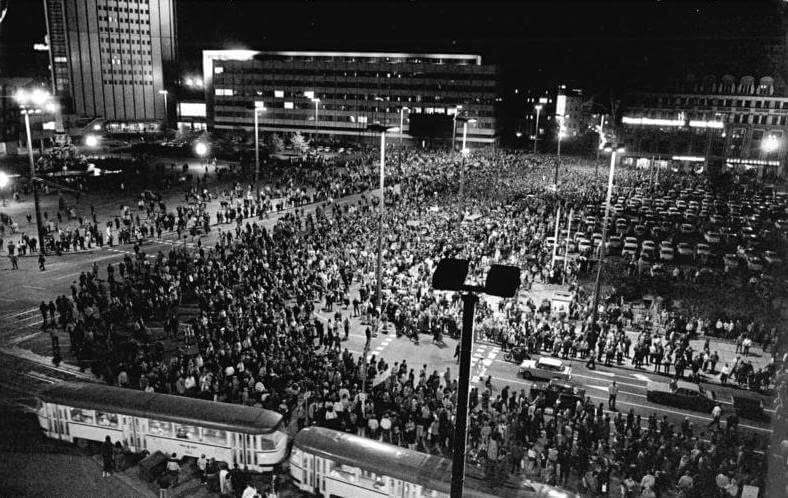
October 3rd is German Reunification Day. The anniversary of the moment the system I had been fighting against for seven years finally collapsed. I was 25 years old. I had already been blacklisted from jobs, surveilled, interrogated by the Stasi, and had spent years inside a system where every aspect of life was planned by the state. Your career was assigned. Your housing was assigned. Your future was a category the government had already decided on before you had a chance to consider it for yourself. Individual ambition was not just discouraged. It was treated as a threat to the system.
I harbored one. I wanted out.
The official request to leave was not a simple form. In East Germany in 1983 it was an act of political defiance. The state treated it as such. I was instantly branded an enemy. Jobs disappeared. The surveillance became visible rather than invisible. The interrogations by the Stasi were not loud or violent. They were methodical and designed to make clear that the system saw everything, knew everything, and would wait for any misstep. The threat was ambient. It was present in every interaction with every institution. It did not break me. It made every day a conscious decision to keep going.
Then I discovered I was pregnant.
I want you to understand what that meant in that specific context. I was already marked by the state. I was already living under the kind of scrutiny designed to produce compliance through exhaustion. And now I was carrying a child who would be born into that same system, into that same controlled world, unless I found a way out. The fear was not abstract. It was specific and daily. Would my child be born into a world without real choice, the way I had been? Or could I, against all odds, build something different for us?
That question became the one I measured every decision against. Every day became a precise calculation of what was worth risking and what was not, with a reason that was no longer just my own ambition but a life that was not yet here and deserved better than the world it was about to enter.
The Wall came down in November 1989. I crossed when it did. I arrived in the United States without English, without a professional network, without any of the social infrastructure that makes starting over navigable. I had spoken Russian as a second language in East Germany. English was not familiar in the way other immigrants from Western Europe might have experienced it. Everything required translation, in the literal sense and in every other sense. The culture, the professional norms, the unspoken rules of how things work here.
I rebuilt. I entered real estate in 2008. And I encountered something I recognized.
The System I Found in Real Estate
The real estate industry has a model it hands to every agent who enters it. Chase as many leads as you can afford to buy. Compete for every inquiry in your market. Accept any client who will give you a transaction. Stay on call. Stay available. Stay hungry. The agent who stops chasing falls behind. The agent who narrows their market is leaving money on the table. The agent who turns down a client is being foolish.
I had seen a version of this before. Not in a boardroom. In a system that told you your role, defined your boundaries, and made the cost of stepping outside them high enough that most people stayed in line. The details were different. The structure was similar. A system designed to produce compliant participants rather than self-determined people.
I refused the first one. I was not going to accept this one.
The zero-competition model I built is not a positioning tactic. It is a structural refusal. It says: I will serve one defined market. One agent. No competing agent in the same territory. The clients I work with are not divided among a pool of agents all chasing the same leads from the same platforms. The market I serve knows one name. Mine. The recognition I build with that market is not shared with a competitor running the same system in the same zip codes.
That is not a niche marketing strategy. That is what it looks like when an agent decides their business will be built on their terms rather than on the terms of the system the industry hands them when they get licensed.
What Zero Competition Real Estate Actually Mean
Zero Competition real estate is not a lifestyle concept. It is a structural one. An agent whose pipeline depends entirely on purchased leads from platforms they do not control does not have a free business. They have a business that runs on someone else’s infrastructure, on someone else’s terms, at a cost that increases every year. The moment the portal changes its algorithm, raises its subscription rate, or enters the agent’s market with its own buyer services, the foundation of that business shifts under them. The agent did not build the foundation. They rented it.
The agent who owns their market, who has built the recognition infrastructure, the warm audience, the inbound relationship with the prospects in a defined geography, has built something that does not disappear when a platform changes its pricing. The Pipeline Builder system is designed specifically to produce that kind of owned infrastructure rather than rented reach. The distribution runs through platforms, yes. But the audience, the recognition, the relationship with the warm prospects, those belong to the agent. They are not transferable back to the platform when the subscription lapses.
I spent time in a system where nothing belonged to me. Not the apartment I lived in, not the career I was allowed to pursue, not the future I was permitted to imagine. I learned in that period what the absence of ownership actually feels like, not as a philosophical concept but as a daily lived experience. The agent who rents their pipeline from a portal is not living under the same conditions. The analogy does not stretch that far. But the structural dependency is real and it is worth examining clearly.
What I built for myself and what I help established agents build is the version of this business where the equity accumulates in something you own. The recognition you build with your defined market grows every week you are present and does not reset when a platform decides to change its terms. The warm audience you develop through consistent, specific video content is an asset in your business, not a subscription feature in someone else’s.
That is what I was building toward when I filed that request to leave in 1983. Not a specific career. Not a specific country. The structural condition of being the person who decides what my life looks like rather than having those decisions made for me by a system I did not choose and did not consent to.
The Promise That Preceded the System
I made a specific promise before the Wall came down. Not out loud and not to anyone who could hold me to it. It was the promise you make when you are carrying a child inside a system you have already decided you will not stay in. The promise that whatever world this child enters, it will not be one where their ambitions are categorized as threats and their future is assigned by an institution that benefits from their compliance.
That promise did not expire when I crossed the border. It did not retire when I got licensed in Florida or when I started building a client base or when I started teaching other agents what I had figured out. It is the thing I measure every business decision against. Does this system produce agents who are more dependent on external infrastructure or less? Does this approach give the agent more ownership over their pipeline or less? Does this model create the structural conditions for business freedom or does it produce a more sophisticated version of the same dependency the industry handed them on day one?
The zero-competition model gives one agent per market a specific protected territory. No competing agent running the same system in the same geography. The recognition built in that market accumulates without being divided among competitors. The inbound conversations it eventually produces arrive because the agent is the only one with that depth of presence in that defined space. The client who calls is not comparing three agents who all showed up in the same feed with the same message. They are calling the one agent whose specific market knowledge became familiar over months of consistent exposure.
That is the structural condition I was working toward when I was 18 years old in East Germany, though I had no language for it then. The structural condition of being the obvious choice rather than one option among many. Of having built something that belongs to you rather than something you are borrowing from a system that can withdraw it.
Who This Is For
This model is not for every agent. It is for established agents who have enough local market experience to deliver the specific, locally authoritative content that makes the recognition system work. It is for agents who are willing to think in terms of the twelve-month investment required to build recognition infrastructure rather than the thirty-day campaign cycle that purchased leads are measured against. It is for agents who look at the standard industry model, chase more leads, compete harder, stay busier and feel something that rhymes with what I felt in 1983 when I decided I was not going to stay in a system that was not built for my benefit.
Not every agent who feels that way is ready to build the alternative. Some need the standard model a little longer. Some are in markets or at stages in their career where the transition requires more runway than they currently have. The Pipeline Protection Review exists to answer that specific question for each agent who asks it. One conversation that looks at the specific market, the specific pipeline situation, and what the recognition-building system would actually require to be viable there.
What I can tell you is that the agents who do make the transition describe the same shift I recognized when I crossed the border in 1989. Not a dramatic single moment. A gradual accumulation of evidence that the new structure was producing something the old one could not. Inbound conversations from prospects who already knew something specific about the agent before calling. First meetings that started further along in the trust journey. A pipeline that did not require constant, exhausting input to maintain its momentum.
That is business freedom as a structural condition rather than a lifestyle aspiration. It is what I was trying to build for the life that was not yet born when I made the promise. It is what I am still building for the agents who come into this system ready to own their market rather than rent their leads.
Frequently Asked Questions About Zero Competition Real Estate
What does zero competition mean specifically in the Pipeline Builder model?
One agent per defined market. The defined market is typically a geographic territory (specific zip codes, neighborhoods, or a clearly bounded local area) that the agent serves and that no other agent in the Pipeline Builder system is serving simultaneously. The recognition infrastructure being built in that territory is not divided among competitors running the same system. The agent who owns the market accumulates the full recognition value of their investment without sharing it with anyone else running the same approach in the same geography.
Is the zero-competition model realistic in a market with many active agents?
Yes, because the model is not about eliminating competitors. It is about being so specifically and consistently present with a defined local audience that the comparison to other agents becomes less relevant. The prospect who has been watching one specific agent’s content for six months and has formed a specific opinion about that agent’s local market knowledge is not in the same comparison-shopping mindset as a prospect who found three agents through a portal search. The zero-competition condition is created by depth of recognition, not by the absence of other agents in the market.
Why does one agent per market matter if the recognition system would work for multiple agents in the same geography?
Because the value of the system is specifically in the undivided accumulation of recognition. Two agents running the same system in the same geographic market would be building audience pools that overlap. The warm prospects they each develop would potentially be encountering both agents’ content and dividing their familiarity between two names rather than concentrating it around one. The compounding that makes the system valuable over time is most powerful when the recognition accumulates without dilution.
How is this different from having a niche?
A niche is a content and marketing strategy. Zero competition is a structural business condition. An agent can have a niche and still compete with multiple other agents who serve the same niche in the same market. Zero competition means the Pipeline Builder system operates with only one agent per defined territory, so the structural advantage of that system accrues entirely to that agent rather than being divided among several.
Final Thought
October 3rd is a date I carry differently than most people carry national holidays. It is the anniversary of a system ending that I had spent seven years working against from inside it. What I learned in those seven years is not a lesson about real estate specifically. It is a lesson about what happens when you decide the system designed for you is not the one you are willing to run your life inside. The business model I built afterward is a consequence of that decision, applied to a different context with different stakes but the same underlying structure. You build what you want to own. Or you participate in what someone else built for their benefit, on their terms, for as long as they allow it.
Start Your Pipeline Protection Review
Related Posts



*Results depend on market conditions, budget, and execution; this content is not legal or financial advice. Always align your targeting and messaging with Fair Housing rules, platform ad policies, and privacy regulations for lead handling.
Author Annett T. Block
Annett T. Block is a real estate marketing strategist and licensed Florida broker. She works with real estate agents who want to stop chasing leads that die on the vine and start attracting business from people who already know them through video-first warm audience building, retargeting, and consistent market presence. She is the founder of The Digital Adopters.
Her thesis is simple: The lead isn’t dead. You asked for the conversation before they knew you.
One agent. One market. ZERO COMPETITION.
In real estate since 2008. Licensed Florida Broker since 2011. More than 2,000 agents, teams, and brokerages served. Featured in Inman News. She is the author of From Listings to Legends.