
The number is probably much larger than you think and it’s growing.
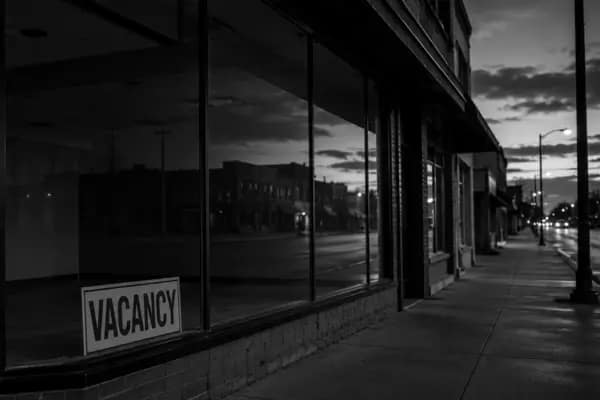
You know what happens when nobody sees you in your market.
They forget you exist.
And when they don’t remember you exist, they work with someone else. Not because that agent is more experienced. Not because they have better credentials. But because that agent was the one they saw. The one they heard. The one who showed up consistently.
The invisibility cost real estate agent yearly faces is not theoretical. It has a dollar amount. And the number grows every year.
Most agents never calculate it.
They blame the market. They blame the economy. They blame lead sources. But what they should be measuring is the compounding cost of being unknown in the town they serve.
Key Takeaways
- 71% of active real estate agents closed zero deals in 2024, costing them six figures in potential annual income.
- Only 8.4% of agents appear in AI-generated answers to high-intent searches in their own market, meaning 91% are functionally invisible to modern buyer behavior.
- The top 1% of agents capture 47% of AI citation share, while the bottom 99% fight for scraps.
- An invisible agent loses not just current business but future business, referrals, and brand equity that compounds annually.
- Agents in the top 30% by visibility earn 10x more than the median agent, not because they work harder, but because they are more familiar.
Table of Contents
The Brutal Math of Invisibility
Let’s start with what we know.
71% of active agents closed zero deals in 2024. Not part-timers. Not hobbyists filtered out of the count. Active licensees who held their license and did the work.
Zero deals. Zero commission. Zero income.
That is not a lead generation problem. That is an invisibility problem.
Meanwhile, 87% of agents do not succeed in real estate, often because of ineffective marketing and the inability to build a recognizable presence.
Now let’s put a number on what that costs.
The median real estate agent earns around $58,960 annually. But that average includes the top performers who carry the entire industry. The real picture is that most agents earn much less, and most earn nothing because they are unknown in their market.
If you are an invisible agent in a mid-market like Tampa, Austin, or Denver, you are competing against visibility that you don’t have. Your hourly effort on lead generation, prospecting, and follow-up produces less because nobody knows who you are.
Let’s calculate the actual cost.
The Zero-Deal Agent
An invisible agent produces zero transactions per year.
If the average transaction produces $2,400 in net commission after all splits and costs, that agent loses $2,400 per transaction not done.
If a visible agent in your market does 12 transactions per year (a reasonable number for an agent with market awareness and referral business), that invisible agent loses $28,800 in annual income just from lack of visibility.
But it gets worse.
The One-Deal Agent
The agent who gets one deal per year does so by accident, not by system. They close one transaction and celebrate. Meanwhile, visible agents in the same market close 12.
That one-deal agent loses $26,400 in annual income compared to the visible agent doing 12 transactions per year. Not because they lack skill. Because nobody remembers who they are.
The Referral-Source Loss
Here is where invisibility really costs you.
Referrals are the highest-converting and lowest-cost lead source in real estate. An invisible agent gets almost no referrals because past clients do not think of them. They do not stay top of mind. When their friend needs to sell a house, they don’t recommend the invisible agent. They recommend the agent they see on Facebook. The one they hear about from neighbors. The one who has a recognizable presence.
Studies show that referrals and repeat business account for 58-68% of a veteran agent’s business and cost essentially nothing in marketing dollars. An invisible agent misses all of that.
If a visible agent gets 6 referrals per year at a 3% commission rate on a $400,000 average transaction, that is $7,200 per year from referrals alone. An invisible agent gets zero.
Add that to the transaction loss, and invisibility is costing you $35,000+ per year in real income.
The AI-Search Invisibility Cost
Things just got worse.
61.3% of buyer-side real estate searches now begin in an AI search engine rather than a traditional search engine. That is a fundamental shift in where buyers discover agents.
And here is the problem: only 8.4% of practicing U.S. agents appear in any AI-generated response to high-intent searches in their own market.
That means 91% of agents are functionally invisible to the primary discovery channel buyers now use.
Meanwhile, the top 1% of real estate agents capture 47% of all AI citation share. The concentration is severe.
What does this mean for your invisibility cost real estate agent situation?
If 61% of buyers start in AI search and 91% of agents are invisible there, then invisible agents are not just losing individual deals. They are being excluded from the primary buyer discovery channel entirely.
An AI-cited prospect closes 4.2x more often than a traditional lead source and costs effectively zero in marketing spend. An invisible agent gets zero of these prospects and continues spending on Zillow, paid ads, and cold calling, all of which close at 2.4% or lower.
That is easily another $20,000 to $50,000 in lost annual income.
The Compounding Effect
Here is what nobody talks about.
Invisibility does not just cost you this year. It costs you next year, and the year after that.
A visible agent builds referral relationships, past client relationships, and market awareness. These grow. A buyer who saw your content two years ago thinks of you today. A past client from three years ago refers five friends. That compounding effect means visible agents earn more every year.
An invisible agent resets every year. No referrals carried forward. No past client momentum. Just constant grinding to find business. This is why competent agents lose clients to less experienced but more visible agents. The invisibility cost compounds into career-ending revenue loss.
That compounding loss is worth 50% or more of lifetime earnings.
The Invisibility Cost Real Estate Agents Are Calculating Wrong
Most agents think this way:
“I close 2 deals per year. The average transaction is $400,000. At 3% commission, that is $24,000 gross. After splits and costs, I net $8,400.”
That is their view of their business.
What they should be calculating is:
“I am $50,000+ per year away from the visibility that produces 12 transactions per year. That is the real invisibility cost real estate agents face.”
The gap between invisible and visible is not about better sales skills or better lead sources. It is about whether people remember you when they need an agent.
Why Agents Stay Invisible
Most agents think visibility is about posting content.
So they post daily. They create videos. They share listings. And they wonder why nothing changes.
Posting is not the same as positioning.
Visibility requires:
Consistency. Showing up in the same channel repeatedly.
Personality. So people develop familiarity with who you are.
Pattern. So the market begins to associate you with a specific expertise or position.
Most agents post without pattern. Without consistency. Without a system that builds over time. The core problem is that agents are comparing personal brand to lead generation when they should be building the visibility system that makes leads irrelevant.
So they remain invisible.
They produce content and get no return. They work hard and get no recognition. They blame the market and keep doing the same thing.
The invisibility cost real estate agents accept is the cost of having no system.
The Agents Winning Right Now
The agents earning $200,000+ per year in competitive markets are not the ones grinding harder on Zillow.
They are the ones who built visibility first. They became recognizable. They created familiarity.
In real estate, the top 30% of agents do virtually all the business. Not because they have special access to leads. Because they have built recognition in their market.
When someone in that market needs a real estate professional, they think of one of those agents first.
That is worth $100,000+ per year in extra income.
And the invisibility cost real estate agents pay is the price of not being in that top 30%.
What Invisibility Costs You Right Now
Let’s be specific.
If you are currently earning $40,000 per year as an invisible agent in your market, and a visible agent in your market is earning $140,000 per year, the invisibility cost is $100,000 per year.
If you have been invisible for 5 years, that is $500,000 in lost income.
Not theoretical. Real money that did not come to you because the market does not know who you are.
If you continue being invisible for the next 5 years, you will lose another $500,000.
That is the real number.
And most agents never calculate it.
They never ask themselves: “What is the cost of nobody knowing I exist in this market?”
They just keep posting and hoping.
FAQ: Invisibility Cost Real Estate Agent Yearly
Can a new agent become visible without spending money on ads?
Yes. Visibility is built through consistency and pattern, not budget. A new agent who shows up consistently in one channel with clear positioning can build visibility faster than an agent with a large ad spend and no system.
How long does it take to shift from invisible to visible in my market?
Consistent visibility usually shows results within 3 to 6 months if the pattern is clear and the message is specific. Most agents underestimate how long it takes because they are inconsistent. Consistency makes the timeline shorter.
If I am currently invisible, can I recover the lost income from past years?
No. But you can stop the bleeding. Every month you remain invisible costs you money. Starting now to build visibility immediately stops that monthly loss and begins compounding toward future income.
Does visibility matter more than experience?
In modern real estate, yes. Buyers choose the agent they feel like they already know before they evaluate experience. An experienced but invisible agent loses to a younger but visible agent consistently.
Should I focus on visibility or follow-up?
Both. But visibility comes first. Follow-up on no leads produces zero results. Visibility that creates leads, followed by good follow-up, creates compounding momentum.
Final Thoughts
Visibility is not optional anymore.
In a market where 61% of buyers start in AI search and 91% of agents are invisible, staying unknown is not a neutral choice. It is an active loss.
Every month you remain invisible, agents with visibility are earning 10x more than you. Building stronger referral networks than you. Creating more momentum than you.
The invisibility cost real estate agents absorb compounds every single month.
The question is not whether you can afford visibility.
The question is whether you can afford to remain invisible.
Refernce Resource
FlyDragon. “91% of Real Estate Agents Are Invisible to AI, According to FlyDragon’s 2026 Benchmark Report.”: Yahoo Finance, April 14, 2026. Documents the AI invisibility statistic and citation concentration among top agents.
Jami Academy. “Real Estate Agent Statistics 2026 | Numbers Every Agent Should Know.”: Accessed June 2026. Source for the 71% zero-deal statistic and agent income distribution data.
Zippia. “35 Jaw-Dropping US Real Estate Statistics [2026]: How Many Realtors Are In The US.”: Accessed June 2026. Provides the 87% agent failure rate and industry valuation data.
Tom Ferry. “Why 87% of All Agents Fail in Real Estate.”: Accessed June 2026. Analyzes causes of agent failure including lack of visibility and marketing strategy.
Realty Hub. “Real Estate Agent Commission | The Percentage They Take Home.”: Accessed June 2026. Breaks down commission splits, expenses, and income ranges for agents at different experience levels.
Related Posts



Author Annett T. Block
Annett T. Block is a real estate marketing strategist and licensed Florida broker. She works with real estate agents who want to stop chasing leads that die on the vine and start attracting business from people who already know them through video-first warm audience building, retargeting, and consistent market presence. She is the founder of The Digital Adopters.
Her thesis is simple: The lead isn’t dead. You asked for the conversation before they knew you.
One agent. One market. ZERO COMPETITION.
In real estate since 2008. Licensed Florida Broker since 2011. More than 2,000 agents, teams, and brokerages served. Featured in Inman News. She is the author of From Listings to Legends.