

The lead isn’t dead. The conversation was just asked for before the trust was.
By Annett T. Block, Licensed Broker and Real Estate Marketing Strategist
A stranger fills out a home value form on your website at 9:14pm. Four minutes later your phone dials automatically, because you were told speed wins. They pick up, sound confused for a second, and you ask them when they want to get on the calendar for a listing appointment.
Silence. Then a vague “just looking,” and they never pick up again.
You mark it a bad lead. You are not wrong that it felt bad. You are wrong about why. That person did not reject you. They rejected being asked to make a decision about the biggest financial transaction of their life with someone they met ninety seconds ago. Real estate lead chasing looks like a lead quality problem from the inside. From the outside, it is a timing problem. The ask came before the relationship did, and no amount of speed or persistence fixes an ask that arrived too early.
Key Takeaways
- Real estate lead chasing is rarely a bad-lead problem. It’s a sequencing problem: the sales conversation gets requested before the prospect has any reason to trust the person asking.
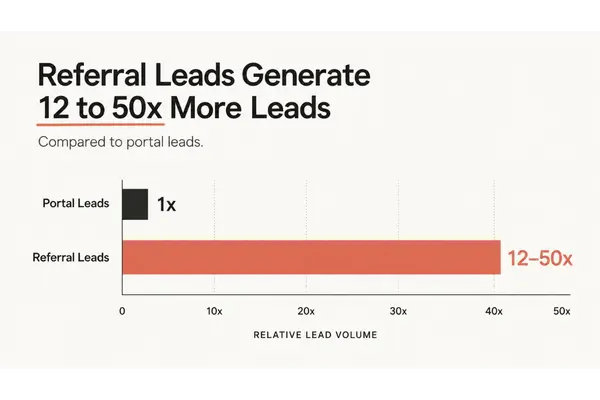
- Portal and purchased leads convert at 0.4 to 1.2 percent industry-wide, while referral leads convert at 14 to 20 percent. The leads aren’t a different species. The prospect’s prior familiarity with the agent is the actual variable.
- The 3-3-3 rule (three calls, three texts, three emails, then move on) treats persistence as the fix for a trust gap, which is why it burns agents out without closing the gap.
- Speed-to-lead matters, but speed alone doesn’t create trust. It just gets you a faster no if there was never any familiarity to begin with.
- The fix isn’t calling faster or chasing harder. It’s building recognition before the lead ever raises their hand, so the conversation is a formality, not an introduction.
Table of Contents
The Real Cost of Lead Chasing
I have watched the same conversation happen in real estate groups for years. An agent spends money on leads. They call once, text twice, hear nothing back, and decide the lead source is broken. Some coach hands them the 3-3-3 rule: three calls, three texts, three emails, then the lead gets marked dead and moved to the trash pile. It sounds disciplined. It is actually a system for working harder at the wrong problem.
Here is what the 3-3-3 rule assumes without saying it out loud: that persistence alone can manufacture trust with a stranger. It can’t. Nine touches from someone the prospect has never heard of, all asking for the same conversation, does not build familiarity. It builds annoyance. The prospect isn’t ignoring you because they are a bad lead. They are ignoring you because every touch is another version of the same ask, arriving from someone they still do not recognize.
I’ve had agents tell me directly, “those are bad leads,” after describing exactly one call and no response. I understand the frustration. I entered real estate in 2008, during the foreclosure years, when everyone was chasing something. What I learned then still holds: the person on the other end of that lead form is not obligated to trust you because you filled their name into a CRM. They owe you nothing until you’ve given them a reason to know who you are.
What the Numbers Actually Say About Cold Leads
This isn’t a feeling. It shows up directly in the conversion data.
Portal leads, the kind purchased through Zillow, Realtor.com, and similar platforms, convert at roughly 0.4 to 1.2 percent from inquiry to closing, according to 2026 industry benchmarking. Referral leads, the kind that arrive already introduced by someone the prospect trusts, convert at 14 to 20 percent. That is not a small gap. A referral lead is somewhere between twelve and fifty times more likely to become a client than a purchased one.
The lead itself is not the variable. The same person, contacted the same way, converts at wildly different rates depending on whether they already had a reason to trust the agent before the phone rang. A referral lead arrives pre-warmed. Someone they already trust vouched for you before you said a word. A portal lead arrives cold, and the agent is asking that same stranger for the same level of trust in a single phone call.
Speed matters inside this, but it gets misread. Research from Real Trends and InsideSales.com found that leads contacted within five minutes are roughly 21 times more likely to qualify than leads contacted after thirty minutes. Most agents hear that statistic and conclude the fix is to call faster. It’s actually telling you something narrower: speed prevents you from losing a warm window that already existed. It does not create trust that was never there. Calling a stranger in four minutes instead of forty still leaves you talking to a stranger.
The National Association of Realtors’ research adds the other half of the picture. Most sellers interview only one agent before hiring, and 66 percent go with someone referred to them or someone they’d worked with before. The market isn’t grading every lead as a fair, open competition. It’s running almost entirely on who the prospect already half-trusts before the first real conversation happens.
You’re Not Chasing a Lead, You’re Skipping a Step
Here is the distinction I want every agent to sit with: chasing a lead and pursuing a relationship are not the same activity, even though they look identical from the outside.
Chasing is trying to compress the entire trust-building process into the follow-up sequence itself. Call, text, email, call again, hoping that sheer contact frequency will do the work that familiarity was supposed to do first. It’s asking someone to skip from stranger to client in nine touches, using nothing but persistence as the bridge.
I think about this inside the same framework I use for the recognition problem generally: Visibility, Recognition, Being Remembered. A lead who fills out a form has given you Visibility. They have not given you Recognition, and they are nowhere near Being Remembered. Lead chasing tries to leap straight from step one to a closed deal, skipping the two steps that actually earn the yes. That’s the gap. Not lead quality. Sequence.
The agents whose lead follow-up actually converts are not better at chasing. They’ve usually already built recognition somewhere else, through video, through consistent local presence, so that by the time the lead form gets filled out, the prospect has already half-decided they know this person. The follow-up call isn’t the introduction. It’s a formality.
How to Stop Lead Chasing Without Losing Leads
The fix isn’t abandoning leads. It’s changing where the trust gets built.
Build familiarity before the form gets filled out. This is the entire logic behind video-first visibility. When someone watches you consistently before they ever need an agent, the lead form isn’t the first time they’ve encountered you. It’s confirmation of something they already decided. I’ve written about how local video content does this faster than any other format available to agents right now, because it puts your voice and your face in front of people before they’re in the market.
Let retargeting do the warming, not the follow-up call. A custom audience built from people who already watched your content is not a cold list. When that same audience eventually raises their hand, the conversation starts from recognition, not zero. This is the mechanism behind how recognition actually gets built, and it changes what a lead even is by the time it reaches you.
Stop treating every lead the same way. A referral lead and a portal lead are not interchangeable, and your first message shouldn’t be either. A referral lead can handle a direct ask because someone already vouched for you. A cold portal lead needs a lower-pressure first touch that gives them a reason to recognize you before you ask for a commitment.
Accept that some leads need six months, not six touches. Not because you should stop following up, but because the follow-up sequence was never designed to build trust on its own. It’s designed to stay present while trust builds elsewhere, through the visibility they see from you in the meantime.
Practical Steps to Break the Chase Pattern
- Pull your last twenty leads and sort them by source. Note which ones had any prior exposure to you (they’d seen your video, followed your page, knew someone you’d worked with) and which arrived completely cold. This alone will tell you where your real conversion gap lives.
- Change your first message on cold leads. Drop the immediate appointment ask. Lead with something low-pressure that gives them a reason to recognize you, a specific insight about their neighborhood, a short video introduction, anything that isn’t “when can we talk.”
- Build one piece of consistent video content weekly, aimed at your specific market, so a percentage of every future lead has already seen you before they fill out a form.
- Retire the 3-3-3 rule as your only system. Keep following up, but stop deciding a lead is dead based on silence to a stranger’s cold outreach. Move slower-warming leads into a longer nurture instead of the trash pile.
- Track first-touch familiarity, not just contact attempts. When you log a new lead, note whether they mention having seen your content. That single data point will show you which channel is actually shortening your sales cycle.
- Give your warmest leads the direct ask, and everyone else a slower on-ramp. Match the pressure of your message to how much recognition already exists, rather than using the same script for a referral and a stranger.
- Revisit your “dead” leads list every 90 days. Someone who wasn’t ready six months ago may have since seen enough of your content to be ready now, without you ever having chased them again.
Frequently Asked Questions About Real Estate Lead Chasing
Is real estate lead chasing really about bad leads, or something else?
It’s rarely the lead itself. Most chased leads are real people with a real need, but they’re being asked for a sales conversation before they have any reason to trust the person asking. The mismatch is timing and familiarity, not lead quality.
Does the 3-3-3 follow-up rule actually work?
It works as a way to stay organized, not as a way to build trust. Nine touches from a stranger doesn’t create familiarity, it just repeats the same unanswered ask. Persistence without prior recognition tends to produce annoyance, not conversion.
Why do referral leads convert so much better than purchased leads?
Referral leads convert at 14 to 20 percent, compared to 0.4 to 1.2 percent for purchased portal leads, because someone the prospect already trusts vouched for the agent first. The lead arrives pre-warmed instead of cold, which removes most of the trust-building work.
Does calling a lead faster actually fix lead chasing?
Speed helps you catch a warm window before it closes, but it doesn’t manufacture trust that didn’t exist. A five-minute callback to a total stranger is still a callback to a total stranger. Speed protects existing familiarity; it doesn’t create it.
What should agents do instead of chasing cold leads harder?
Build recognition before the lead form gets filled out, through consistent video and local visibility, so the follow-up call isn’t the prospect’s first exposure to you. Match your first message to how much familiarity already exists instead of using one script for every lead.
The Bottom Line
That person who filled out the home value form at 9:14pm didn’t do anything wrong, and neither did you, exactly. You just asked for a conversation your relationship hadn’t earned yet. Real estate lead chasing feels like a leads problem because the silence lands on your phone. It’s actually a sequencing problem, and it gets solved somewhere upstream of the follow-up call entirely.
You don’t need better leads. You need the people who eventually fill out that form to already have a reason to trust you by the time they do it. Build the recognition first. Let the conversation be the formality it was always supposed to be, not the introduction you were forcing it to be.
Stop chasing leads that die on the vine. Start being the agent they already knew before they ever raised their hand.
Keep Learning
The Real Estate Recognition Problem → the full framework behind why recognition, not lead volume, decides who gets the call.
Local Video Content for Real Estate Agents → the fastest way to build familiarity before a lead ever reaches your CRM.
Why Competent Agents Lose Clients → what happens when skill isn’t enough to beat a more visible competitor.
Consistency in Real Estate → why repetition, not any single tactic, is what makes recognition stick.
Why Real Estate Agent Market Presence Suddenly Disappears → what happens when visibility isn’t maintained long enough to convert.
About the Author
Annett T. Block is a real estate marketing strategist who helps agents build recognizable, warm audiences through video-first content, strategic retargeting, and consistent local presence. A real estate broker herself, she built her approach after experiencing firsthand the pressure to chase cold leads and outdated scripts, and set out to build a system that lets agents get chosen instead of chasing. Her work is built around the BE Framework: Be seen. Be trusted. Be chosen.
Last Updated: August 2026
Related Posts



Author Annett T. Block
Annett T. Block is a real estate marketing strategist and licensed Florida broker. She works with real estate agents who want to stop chasing leads that die on the vine and start attracting business from people who already know them through video-first warm audience building, retargeting, and consistent market presence. She is the founder of The Digital Adopters.
Her thesis is simple: The lead isn’t dead. You asked for the conversation before they knew you.
One agent. One market. ZERO COMPETITION.
In real estate since 2008. Licensed Florida Broker since 2011. More than 2,000 agents, teams, and brokerages served. Featured in Inman News. She is the author of From Listings to Legends.