

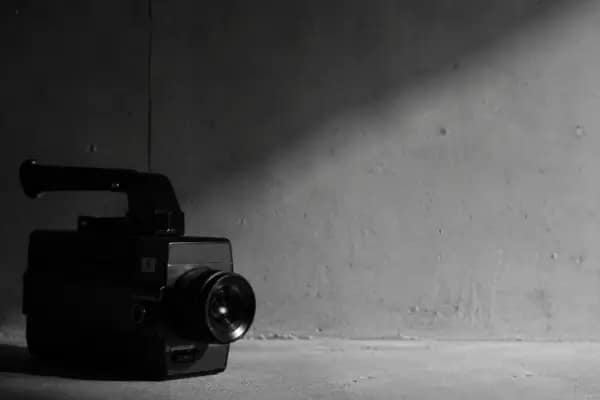
The gap between knowing video works and using it in a way that actually builds trust is where most agents quietly lose the visibility battle.
What most agents miss when trying real estate video is not the equipment. It is not the editing. It is not even the consistency, though that matters.
It is the strategy underneath.
Real estate video marketing for agents has become one of the most talked-about topics in the industry. The data on its effectiveness is not in dispute. And yet, the majority of agents who attempt video end up posting content that disappears into the feed without moving a single lead closer to a conversation.
The reason is structural, not personal.
Most agents are producing video content as if the camera itself is the strategy. They point. They shoot. They post. And then they wonder why the phone is not ringing.
Video without a positioning system is just footage. Agents who are winning with video have figured out something the rest of the market has not: the camera is not the point. What you say, to whom, in what sequence, and for what purpose, that is the point.
This post is about what that actually means.
Key Takeaways
- Most agents approach real estate video as a posting activity, not a trust-building system.
- The data confirming video effectiveness is not the same as knowing how to use video strategically.
- Listing videos and personal brand videos serve entirely different purposes and require different approaches.
- The agents gaining visibility through video are not the ones with the best production, they are the ones with the clearest message.
- Real estate video marketing for agents only works when the content is aligned to a specific audience and a specific stage of the trust journey.
Table of Contents
What Most People Miss When Trying to Make Video Work
There is a version of real estate video that most agents have seen a hundred times.
A smiling agent stands in front of a property. They walk the hallway. They point at the quartz countertops. They say something about a “beautiful open floor plan.” Then they mention they are committed to serving buyers and sellers in the area. Then it ends.
That video is not wrong. But it is not doing any of the things agents need video to do.
Video built around properties answers the question “what does this house look like?” That is useful for buyers already in the pipeline. But it does nothing for the harder problem most agents face, which is getting found, getting remembered, and getting chosen before the buyer ever picks up the phone.
Real estate video marketing for agents collapses in most cases because agents conflate two completely different functions: listing marketing and personal brand building. These are not the same activity. They do not serve the same audience. And they do not produce the same result.
Listing video belongs to a transaction. Personal brand video belongs to a relationship.
The agents who are struggling with visibility are almost always over-invested in transaction video and under-invested in relationship video. And they often do not realize it because the listing video feels productive. It is tangible. It has a clear subject. It is something they can point to.
Relationship video is harder. It requires agents to talk about ideas, not properties. It requires them to have a point of view. It requires them to say something specific enough to be useful and honest enough to be trusted, rather than polished enough to look professional.
That is where most agents stop. And that is exactly where the opportunity is.
If you are working through what kind of content actually moves the needle for your market, the framework inside what content builds trust with buyers and sellers addresses this directly.
Why Real Estate Video Marketing for Agents Keeps Failing
The performance numbers on video are not ambiguous.
Listings with video receive 403% more inquiries than those without, and homes with video sell up to 31% faster.Agents who use video marketing grow their revenue 49% faster than those who do not.Video has moved from a nice-to-have to a competitive necessity, buyers expect it, and algorithms reward it.
And yet, only 38% of real estate agents currently use video for their listings, and just 9% create listing videos at all. Only 10% of recent home sellers reported that their agents effectively used video to market their property.
That gap is not explained by agents not believing in video. Most agents believe in it. The gap is explained by something else: most agents do not know what to say once they turn the camera on.
The production problem is largely solved. In 2025 and into 2026, authenticity wins on platforms like Instagram Reels and TikTok. Raw phone footage often outperforms polished studio productions because it feels organic rather than advertorial. A modern smartphone is sufficient. The real estate video marketing for agents question is not “how do I make a better video?” The real question is “what do I make a video about, and why would someone watch it?”
That second question exposes the structural problem.
When agents do not have a positioning framework, they default to the most available subject matter: properties. But buyers watching property video are already transactionally minded. They are evaluating options. They are not building a relationship with an agent. They are looking at a house.
Agents who are building real visibility are making a different kind of content. They are making video that speaks to the buyer or seller before the buyer or seller is ready to transact. They are answering the questions their audience is quietly carrying. They are demonstrating expertise in a way that makes the viewer think, “I did not know that. I want to know more.”
Video walkthroughs are rated the number one most useful content type for home buyers, ahead of photos, floor plans, and virtual tours. But property videos under 60 seconds generate 2.5 times more social shares than longer content. Buyers are not looking for production value. They are looking for speed to understanding. If your video does not answer something useful in the first few seconds, it does not get watched.
The agents winning with video have a content strategy that mirrors the trust journey. They are not just posting video. They are building a sequence of content that moves someone from “I’ve never heard of this person” to “I only want to work with this person.” That does not happen from one video. It happens from a system.
For a closer look at how that content sequence actually works inside a real system, the conveyor belt approach described in building a nurture content library for real estate professionals shows exactly what that structure looks like in practice.
What the Agents Getting This Right Are Actually Doing
The answer is not a content calendar. It is not a posting schedule. It is not better lighting.
The agents who are getting consistent results from real estate video marketing understand that visibility is a function of specificity, not volume.
They have made one decision that most agents avoid: they have decided who they are talking to, and they have stopped trying to talk to everyone.
A video that speaks directly to a first-time buyer navigating a competitive market in a specific city is useful to that buyer. A video that speaks to any potential buyer in any market is useful to no one in particular. The more specific the content, the more the right viewer feels seen. And the more a viewer feels seen, the more they trust the person on camera.
This is not intuitive for agents who have spent their careers trying to maximize reach. The instinct is to cast wide. But real estate video marketing for agents operates by a different logic: depth of resonance converts better than breadth of exposure.
Annett’s BE Framework captures this progression: Be Seen. Be Known. Be Trusted. Be Chosen.
Most agents are trying to skip from Be Seen directly to Be Chosen. They post a few videos, they get some views, and then they wonder why those views are not turning into listings. The missing steps are Be Known and Be Trusted. That is where video does its actual work, not by reaching people, but by building the specific kind of familiarity that makes a person decide, before a single conversation, that they already know who they want to call.
The agents who have built that kind of presence did it with content that answered real questions, showed real thinking, and held a clear point of view. They did it consistently enough that their audience had seen them enough times to feel they knew them. They did not do it by being the most polished person on camera. They did it by being the most useful.
94% of real estate agents believe video marketing helps them stand out from the competition, and 95% of buyers say real estate videos had a positive impact on their decision-making process. The agents who are actually experiencing those outcomes are the ones who have treated video as a trust-building discipline rather than a marketing tactic.
The difference is not capability. It is intention.
If your video content is not currently building toward that kind of recognition, the Market Availability Review at is the right starting point. It identifies exactly where the gaps are in your current visibility system.
Frequently Asked Questions About Real Estate Video Marketing for Agents
Do I need professional equipment to start with video marketing as a real estate agent?
No. A modern smartphone in good lighting is sufficient for social video content. Production quality matters far less than clarity of message. Agents who have tried to compete on production value alone consistently underperform agents who show up consistently with useful, specific content recorded simply.
How long should my real estate videos be?
It depends on the platform and purpose. For social media, under 60 seconds performs best for organic reach and shareability. For detailed educational content on your website or YouTube, two to five minutes is appropriate. The guiding principle is to be as short as the content allows while still delivering something genuinely useful.
Should I focus on listing videos or personal brand content?
Both serve different purposes and different stages of the trust journey. Listing videos support active buyers already in your pipeline. Personal brand content builds recognition and trust with people who do not know you yet. Agents who are struggling with visibility are almost always over-indexed on listing video and under-indexed on content that demonstrates their expertise and point of view.
How often do I need to post video to see results?
Consistency matters more than frequency. One well-positioned video per week, published reliably over 90 days, outperforms sporadic bursts of content. The goal is for your audience to develop a sense of familiarity with your thinking, and that requires regular enough presence to build a pattern.
Why are my videos getting views but not generating leads?
Views and leads are not the same metric. Views measure reach. Leads measure trust conversion. If your videos are attracting views but not conversations, the content is likely too general to create the specific kind of recognition that leads to action. The message needs to be specific enough that the right viewer thinks “this person understands exactly what I am dealing with.”
Final Thought
The real estate video marketing conversation has been dominated for years by questions about equipment, editing, and posting frequency. Those questions are not wrong. But they are secondary.
The primary question is simpler and harder: what are you trying to build?
If the answer is “more visibility,” then the next question is visibility with whom, for what purpose, at what stage of their decision. Video without those answers is just content for content’s sake. It gets watched, occasionally. It rarely gets remembered. It almost never converts.
The agents who have figured this out are not better on camera. They are clearer about who they are talking to and what that person needs to hear. That clarity is what makes the content land. That clarity is also what the market is selecting for right now, because the noise level is high enough that anything without a clear signal gets lost immediately.
You can have all the right equipment, the right lighting, the right posting schedule, and still be invisible.
Clarity of message and specificity of audience are the variables that actually move the needle.
If you are not sure whether your current video content is positioned to do that work, a Market Availability Review will show you exactly where the gaps are.
Being on camera is not the hard part. Saying the right thing to the right person is.
Annett T. Block has served over 2,000 real estate agents, teams, and brokers. She entered real estate in 2008 during the housing market crash and built her expertise through foreclosures, short sales, and 29 years of living inside the industry. She is the founder of Digital Adopters and the Florida Connect brokerage. Her work focuses on helping real estate professionals become visible, trusted, and chosen, not by doing more, but by doing the right things with precision.
Reference Resources
REsimpli Real Estate Video Statistics: Source for listing inquiry and sales speed data, agent adoption rates
Reel-E Real Estate Marketing Statistics 2026: Source for video format performance data and social media behavior
Investorra Real Estate Video Statistics: Source for buyer decision-making impact data
Related Posts


Author Annett T. Block
Annett T. Block is a real estate marketing strategist and licensed Florida broker. She works with real estate agents who want to stop chasing leads that die on the vine and start attracting business from people who already know them through video-first warm audience building, retargeting, and consistent market presence. She is the founder of The Digital Adopters.
Her thesis is simple: The lead isn’t dead. You asked for the conversation before they knew you.
One agent. One market. ZERO COMPETITION.
In real estate since 2008. Licensed Florida Broker since 2011. More than 2,000 agents, teams, and brokerages served. Featured in Inman News. She is the author of From Listings to Legends.